
Recovering from a joint replacement or fracture isn’t always as easy as packing up and heading home after a hospital stay. It can take some time before you are ready to return to your normal routine.
For most patients, there is a period of recovery following their hospital stay, during which they still require significant medical care. They might not need the 24/7 monitoring and acute care of a hospital, but they aren’t quite ready to go at it alone, either.
A transitional care unit can offer interim support before they are prepared to live independently at home again. It can be an ideal place to recover from a joint surgery or serious fracture. Understanding how these facilities work is the first step to a smoother recovery process—so here’s what you’ll need to know.
Want to find a transitional care unit close to home in Adams County? Learn More About EARH Transitional Care
Why Some Patients Aren’t Ready For Home Right Away
Most hospital stays are short, with the average hospital stay in the United States being just 5.2 days. Even after a major orthopedic surgery, you might just spend a couple of days in acute care, and that’s often not enough time to feel like you are ready to manage day-to-day life again.
Some common challenges you might face after a joint surgery or fracture could include things like:
- Difficulty walking or moving around on your own
- Limited strength and mobility
- Pain or discomfort during movement
- Ongoing travel to physical therapy appointments
- Help with medications, wound care, and daily care
Trying to manage everything at home on your own can be overwhelming, especially if you don’t have a sizable support network nearby. A transitional care unit offers a safer alternative that gives you space to focus on your recovery while still having access to medical support.
What is a Transitional Care Unit?
A transitional care unit (TCU), often located within a hospital, is designed for short-term stays following a discharge from the hospital. Patients in a TCU no longer need acute care, but they still need skilled nursing care, rehabilitative therapy, and care coordination services.
The average TCU stay ranges from a few days to a few weeks, depending on your condition and needs. However, the goal for the TCU team is clear: help you recover, regain function, and return home ready to live independently.
Our approach to this service is slightly different—-East Adams Rural Healthcare is what we call a ‘swing bed hospital’ with on-site transitional care services.
How a TCU Supports Joint and Fracture Recovery
Healing takes time, but the healing process can be even more effective with plenty of support. A TCU can speed up the healing process and result in a better outcome by offering:
Personalized Rehabilitation Plans
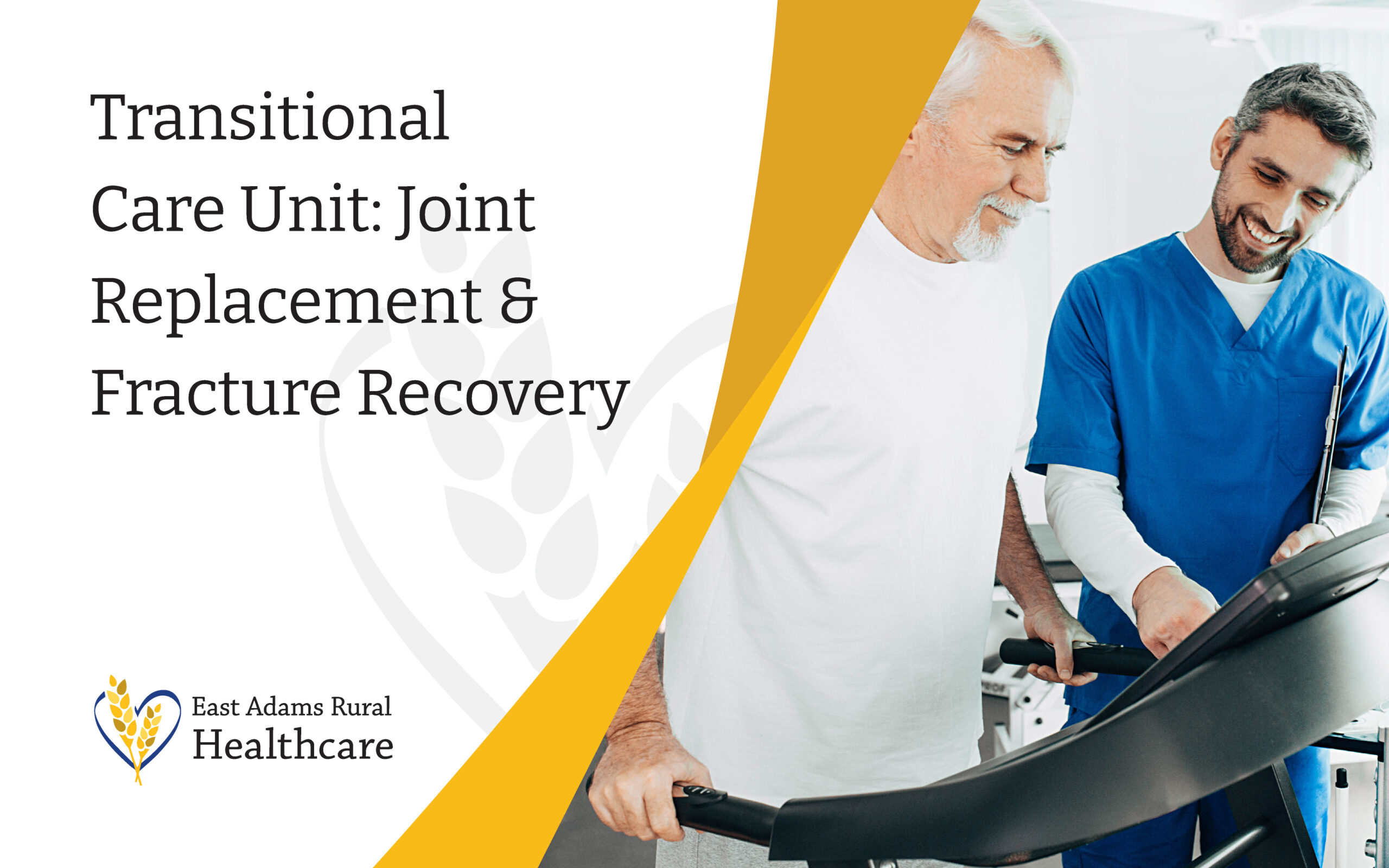
Physical therapy plays a huge role in regaining movement and strength after joint surgery or a fracture. In a TCU, patients work with therapists daily on personalized rehab plans that could include:
- Improving range of motion in the joints
- Strengthening muscles in the surrounding areas
- Practice safe movement techniques
- Learning to use mobility aids like walkers or canes
Occupational therapy can also help patients relearn essential tasks, such as dressing, personal hygiene, or preparing meals.
Around-the-Clock Medical Support
The first few days after surgery or a fracture are the most critical, but even beyond this time, recovery has risks. You could develop an infection, have a reaction to medication, or slow your healing process by trying to do too much too soon.
A TCU can provide 24/7 skilled nursing care to monitor your healing progress and help catch any potential issues early on. They can also help manage your medications and monitor surgical sites.
Help With Everyday Activities
For many people, the hardest part of recovery is getting back into a normal routine while your body is still healing. TCUs can help with daily tasks such as bathing, dressing, moving around, and making meals while you regain independence at your own pace. Having that kind of support reduces your risk of falls or reinjuring yourself and can help you return home stronger and more prepared for independent living.
Care Coordination & Discharge Planning
The staff in a transitional care unit work directly with your surgeon, primary care provider, and therapists to keep everyone on the same page. They can help you plan what happens next, including:
- Setting up outpatient therapy appointments
- Reviewing your medications
- Coordinating home health care (if needed)
- Educating family members and caregivers on how to help
The TCU team will give you a structured plan for returning home, so you know what to expect and who to contact if you have concerns.
Who Should Consider Using a Transitional Care Unit?
Transitional care units are great for people of all ages who need extra recovery time and support after:
- Joint replacement surgery
- Serious bone fractures
- Sports injuries that required surgery
—or any other complex procedure that will require rehab services. Even active and younger patients can benefit from a TCU if they live alone, lack local support, or need a more structured recovery before returning to work or home.
Insurance coverage, including Medicare, may apply, depending on your circumstances. You can talk to your local Ritzville TCU to learn more about eligibility and options.
Transitional Care at EARH: Recovery in Ritzville
East Adams Rural Healthcare believes that recovery is better when it’s close to home. Our swing bed program acts as a transitional care unit for local patients, allowing you to stay in a familiar setting while receiving rehabilitation and skilled nursing care. Our transitional care services include:
- Daily physical and occupational therapy
- Skilled nursing available 24/7
- Medication management
- Nutrition support and on-site meals
- Personalized recovery planning
And because we’re located right here in Ritzville, your family and friends don’t have to travel far to visit you and help with your recovery.
If you need a supportive environment where you can rebuild your strength and regain your independence, EARH is here for you. Talk to our team or visit this page to learn more about EARH’s transitional care services. Let us help you on this next phase of recovery, close to home.
