
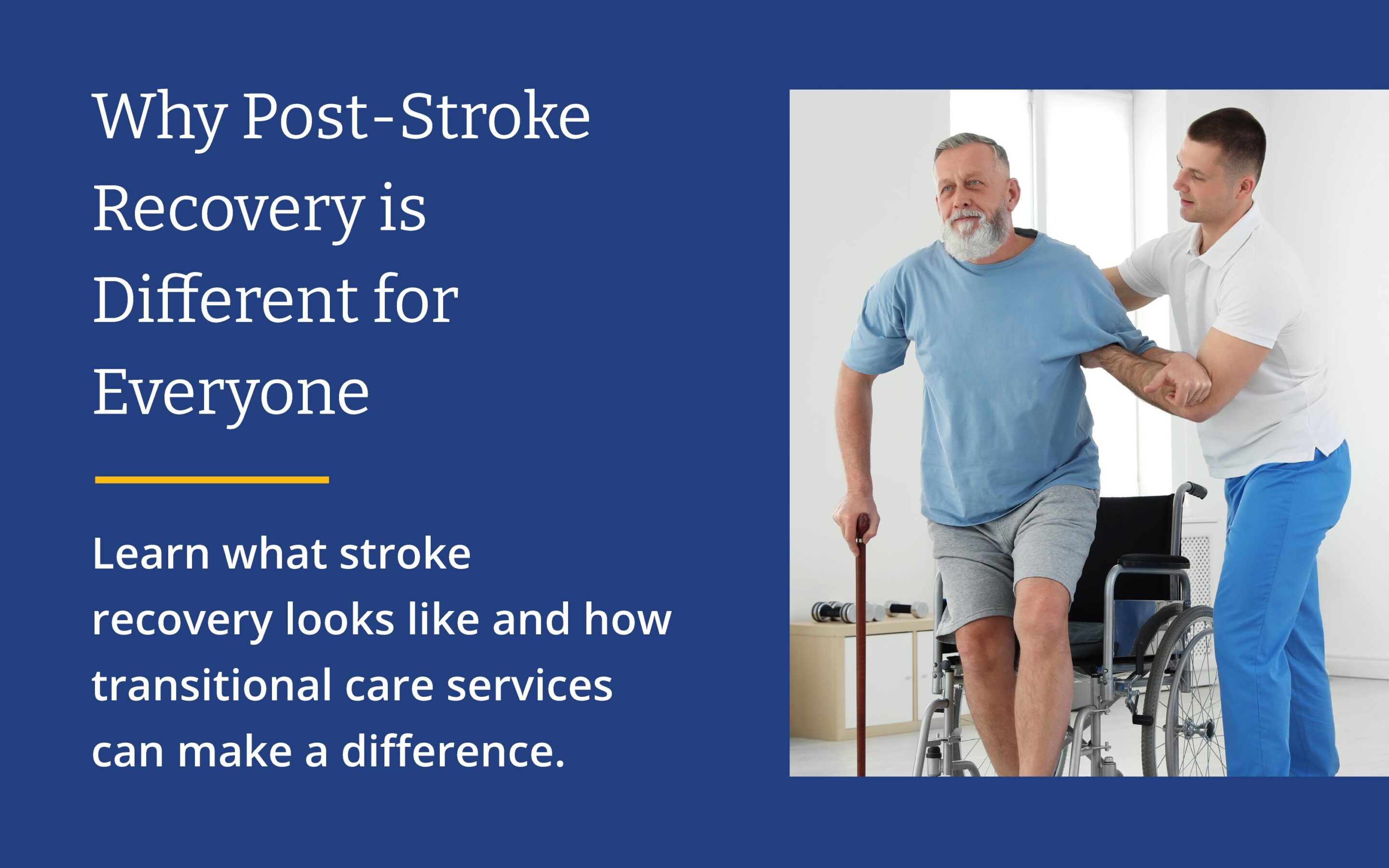
A stroke can change your life in a moment—the stroke recovery journey can take much longer.
Every stroke survivor’s journey is different, but most share a goal of regaining independence. Maybe they need to learn to walk again, or they want to return to work. Or perhaps they need to rebuild their confidence about living independently once again. Whatever independence means to them, stroke recovery takes time, commitment, and the help of a committed team.
If you’ve survived a stroke or know a loved one who has, it can be helpful to learn what stroke recovery looks like and how transitional care services can make a difference. The team at East Adams is here to help.
Learn About Our Acute Care Services
What Does Post-Stroke Recovery Look Like?
Every stroke is different. Some people experience lasting physical challenges like weakness or paralysis while others regain strength and coordination quickly. Speech and cognitive functions can be differently impacted as well, leaving some stroke survivors with memory loss, difficulty concentrating, or even a loss of speech. The emotional impacts can vary just as much as the physical ones.
Patients will often leave the hospital with new medications, therapy plans, and a long list of follow-up appointments and tasks. It’s a lot to manage, especially for families that are navigating this kind of medical journey for the first time.
Post-stroke care needs a lot more than a discharge summary. It needs structure, support, and a team that understands what it takes to regain independence.
How Transitional Care Services Can Help Support Recovery
The East Adams team cares about the ongoing wellbeing of our stroke-recovery patients. Our transitional care services can help bridge the gap between hospital discharge and life back at home. This includes our swing bed program, where patients can continue their recovery at our facility without transferring to a far-off nursing home or rehabilitation facility.
For stroke survivors, transitional care can help with:
- Physical therapy to rebuild strength and improve mobility
- Occupational therapy to relearn daily tasks like dressing and eating
- Speech therapy for patients with communication or swallowing difficulties
- Medication management to avoid complications or interactions
- Education and support for both patients and caregivers
The goal is simple: help patients safely transition back home with the tools, skills, and confidence they need to be independent again.
What Independence Looks Like After a Stroke
For many stroke survivors, independence means different things at different stages of recovery. At first, it might just mean being able to sit up alone or feed yourself. Later, it could mean walking without assistance or returning to a favorite hobby.
Some milestones in stroke recovery often include:
- Regaining the ability to dress, bathe, and use the restroom
- Moving from a wheelchair to walking with a cane or walker
- Communicating more clearly with loved ones and care providers
- Managing medications without confusion
- Feeling confident enough to prepare meals, use transportation, or attend social activities
Not every patient will hit every milestone, but even a little progress is meaningful. Small steps are a critical part of building toward the big steps.
Why Local Transitional Care Matters
Recovering from a stroke close to home isn’t just convenient—at East Adams Rural Healthcare we believe it’s essential to healing. Being near familiar surroundings and loved ones can provide a lot of comfort, lowering your stress levels and leading to better recovery outcomes.
EARH ensures stroke survivors don’t have to travel hours away to get the care they need. Our transitional care services combine hospital-level support with a local, personalized touch. Patients receive 24/7 skilled nursing care, regular therapy sessions, and one-on-one support from a team that understands their needs.
Our care doesn’t stop when you go home, either. We help coordinate follow-up appointments, support services, and continued therapy to ensure a smooth transition back home.
Continue Your Post-Stroke Recovery at EARH
You can be independent again after a stroke—you just need the right care, the right team, and the right plan. EARH’s transitional care program helps patients regain strength while restoring their confidence and preparing them to return to their lives back at home.
If you or a loved one is navigating stroke recovery, we’re here to help. Learn more about our swing bed program and transitional care services online or call us and speak with a member of our care team today.
